Article: Heirloom jewelry: appraise before you decide
Heirloom jewelry: appraise before you decide
A jewelry box that has been closed for years. A safe deposit box whose contents are discovered after a death. A heterogeneous collection including a 1930s engagement ring, three outdated brooches, a stopped men's watch, and a handful of tangled chains.
The question that follows is almost always the same: what do we do with it?
There are three possible answers: keep, transform, sell. All three are legitimate, and depending on the pieces, all three can coexist within the same collection. But none can be correctly decided before knowing what you actually have in hand.
Three Decisions, One Prerequisite
An appraisal is not just an administrative step to check off before selling. It's what determines the decision itself.
We regularly see people arrive with a preconceived intention, such as "I'm here to sell these jewels, no one wears them," and leave with a different decision, because the collection contained a signed piece that was better kept, or an old setting whose stone could be remounted for a subsequent generation.
The reverse is also true. Collections to which significant sentimental value is attached sometimes turn out to be modest in material terms. Stating this clearly is part of the job.
What Holds Value, and What Is Mistakenly Believed to Be Worthless
Signature Trumps Material
The weight of the metal constitutes a floor, never the full value. A setting signed by a recognized house can be worth several times its gold and stone content, provided the attribution holds: signature, numbering, manufacturing consistency, original documents.
Caution is advised in both directions. Many pieces circulate "in the style of" without actually being so, and a signature alone is not enough to establish provenance.
Hallmarks Tell Part of the Story
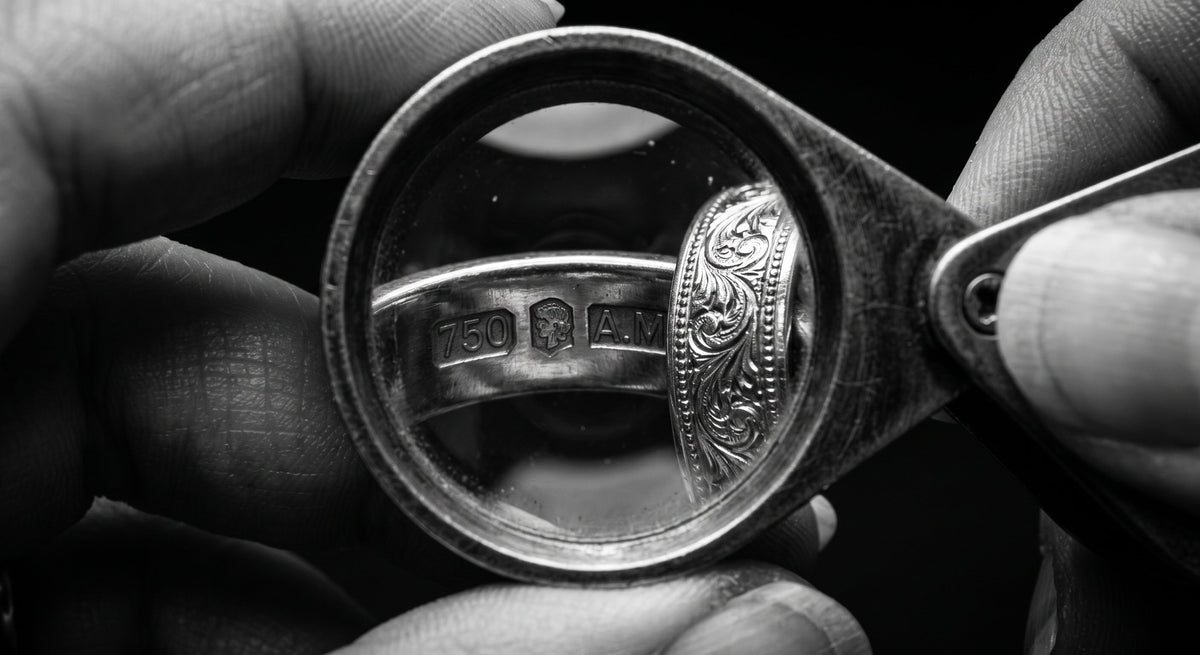
Assay marks, maker's marks, workshop marks: they indicate the metal content, sometimes the manufacturer, sometimes the period and place of manufacture. They are often tiny, placed inside a ring or under a clasp, and frequently illegible to the naked eye. They rarely survive a poorly executed polishing.
Old Cuts Are Not Flaws
An old-cut diamond, a cushion cut, or a rose cut does not sparkle like a modern brilliant cut. This is not an imperfection to be corrected. These cuts are sought after, and recutting an antique stone to give it a contemporary sparkle destroys both weight and interest.
Outdated, But Signed Pieces
Brooches, ear clips, and wide bracelets from the 1950s to the 1970s are typically the pieces that remain at the bottom of the safe. They no longer match how people dress. This says nothing about their value, which depends on the workshop, the era, and the quality of execution.
What Is Indeed Worth Little
Honestly: gold plating has no material value. Pearls, very common in inheritances, do not sell well. Costume jewelry, even old and well-made, falls under personal attachment, not heritage.
Keeping
Keeping does not mean letting it sit idle. A preserved collection requires three things.
An inventory: photographs, descriptions, weights, measurements, hallmarks noted. This is the document that will allow the next generation not to start from scratch.
Consistent insurance coverage. Household policies cap the value of precious items, often well below what an inheritance represents. A written appraisal allows you to discuss with your insurer on a real basis rather than on a memory of the purchase price.
Regular maintenance. Setting prongs wear out, clasps weaken, suspension rings open. A setting check every two to three years costs little and prevents the loss of a stone, an irreversible accident and much more common than one might imagine with antique jewelry put back into use.
Transforming
Transformation is often the most appropriate solution: it brings a piece that no one wears back into circulation, while preserving the material and its lineage.
What can be reused well: main stones, accent stones when there are enough of them, and gold, which can be melted down and reused.
What is lost: the original setting, its hallmarks, and all the craftsmanship of the era that went into its architecture. An antique setting can be resized within certain limits, but cannot be indefinitely transformed without compromising its structure.
And there are cases where we advise against transformation. When the piece has an interest that goes beyond its components, disassembling it amounts to replacing it with something less interesting. We say this beforehand, not afterward.
The most successful projects we undertake often start from an inherited collection: a central stone from a grandmother's ring remounted on a contemporary creation, the small diamonds from a brooch redistributed into two pendants for two sisters.
Selling: Direct Sale or Consignment
Two paths, two logics.
A direct sale provides immediate payment and closes the matter. The price reflects the fact that we take the risk of holding and reselling.
Consignment involves entrusting the piece to us, displayed and offered to our clientele, with a reserve price set together below which it will not be sold. We are compensated by a commission on the selling price. The final return is generally higher, but the timeframe is uncertain: a few weeks for a sought-after piece, several months for a more confidential one.
The choice depends less on the piece than on your situation. An inheritance division awaiting settlement is poorly suited to an open timeframe.
How We Proceed
We receive clients for private consultations, by appointment, on Mondays or Saturdays, outside of our opening hours, so that these conversations can take place without anyone entering the shop.
The workshop examination and verbal opinion are free of charge. The preparation of a written appraisal report, which is useful for an insurer, a notary, or other heirs, is subject to a prior quote.
Atelier Ulmann. Route de Thonon 52, 1222 Vésenaz. Make an appointment.